

What is Fibre Channel?
Accessing data in storage area networks
In a world where organizations increasingly rely on large-scale storage systems to store and retrieve critical data, the challenge arises of ensuring reliable, scalable and fast connectivity between servers and storage devices. Fibre Channel is a high-speed networking technology specifically designed for storage area networks (SANs). It empowers organizations to establish robust and fast SANs. Optimized for mission-critical applications, including applications that require synchronous data mirroring, Fibre Channel enables seamless access and retrieval of critical information, meeting the demanding connectivity requirements of modern enterprises.
Fast and reliable connectivity
Fibre Channel provides high-speed and reliable data transfer for enterprise storage networks.
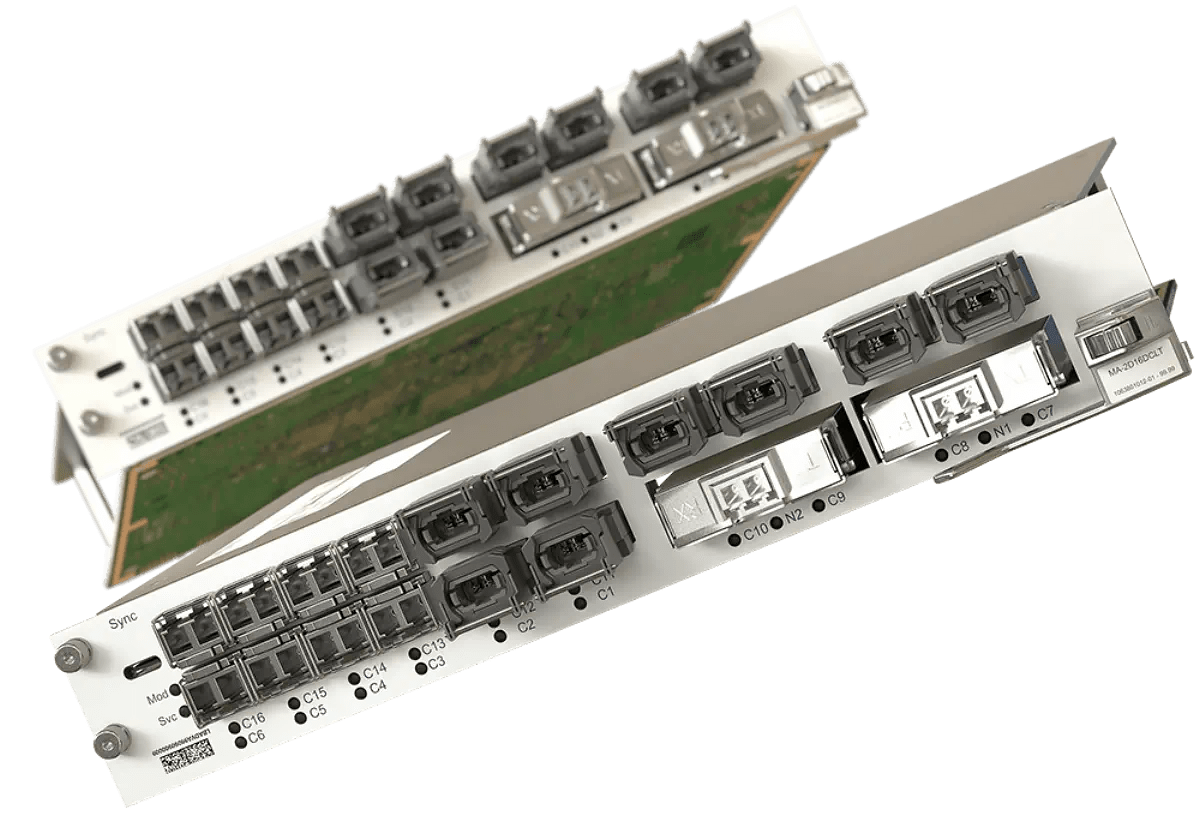
With purpose-built innovation, our FSP 3000 DWDM transport system empowers users to natively extend Fibre Channel SANs over metro and regional distances, including 64G Fibre Channel inter-switch links.
Fibre Channel SAN over distance
Fibre Channel SAN extension over distance requires purpose-built DWDM technology that supports the native transport of Fibre Channel speeds with ultra-low latency and 100% throughput, as well as the support of specific Fibre Channel features.

Extending Fibre Channel reach for BCDR
With Fibre Channel, flash arrays and NVMe technology innovation, enterprises can upgrade their SANs to support highest performance and cope with massive data traffic growth. To avoid traffic bottlenecks in data center interconnects (DCI), enterprises also need a solution that enables the native transport of high-speed Fibre Channel over long distances to interconnect geographically dispersed data centers, which play a key role in enterprises’ business continuity and disaster recovery (BCDR) plans. BCDR plans enable enterprises and organizations to get back to normal as soon as possible after unexpected problems occur and minimize data losses. With purpose-built innovation for SAN DCI, our FSP 3000 DWDM transport system empowers users to natively extend Fibre Channel SANs over metro and regional distances, covering all speeds of Fibre Channel, including the latest 64G Fibre Channel inter-switch links.
64Gbit/s Fibre Channel over DWDM
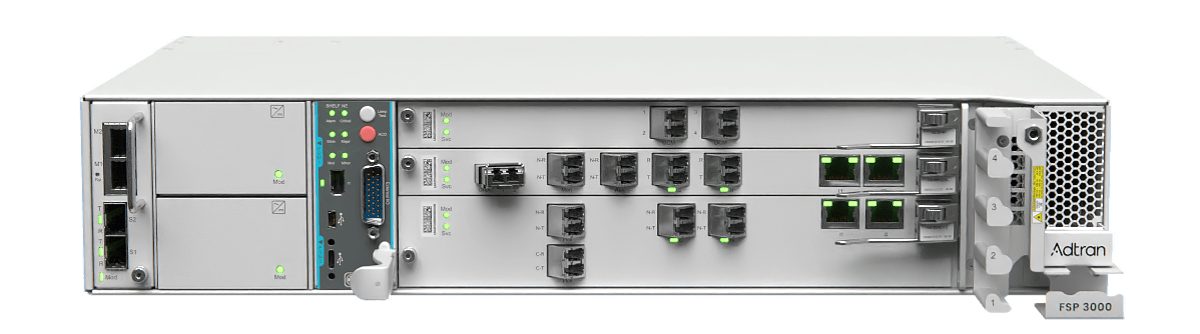
Adtran’s FSP 3000 is the market’s first and only solution enabling the transport of 64Gbit/s Fibre Channel over distance with DWDM technology. It also supports quantum-safe encryption for highest data security.
Optimizing SANs with Fibre Channel
With over 25 years of experience and numerous market-first solutions, our FSP 3000 DWDM platform is the underlying connectivity solution for many of the world's leading BCDR implementations. It empowers users to securely extend Fibre Channel SAN over long distances to interconnect geographically dispersed data centers. Our FSP 3000 supports all Fibre Channel speeds up to 64Gbit/s and features such as Fibre Channel performance monitoring and seamless integration with Fibre Channel trunking. Moreover, it also supports the transparent transport of other relevant enterprise protocols such as Ethernet or IBM mainframe, and is continuously tested and qualified by major SAN vendors. What’s more, with ConnectGuard™ optical encryption, data in motion is protected against cyberattacks, even from quantum computers. With our FSP 3000, organizations can optimize SAN performance, reliability, and scalability to meet the demands of data-intensive applications.
Related products
 ;
;